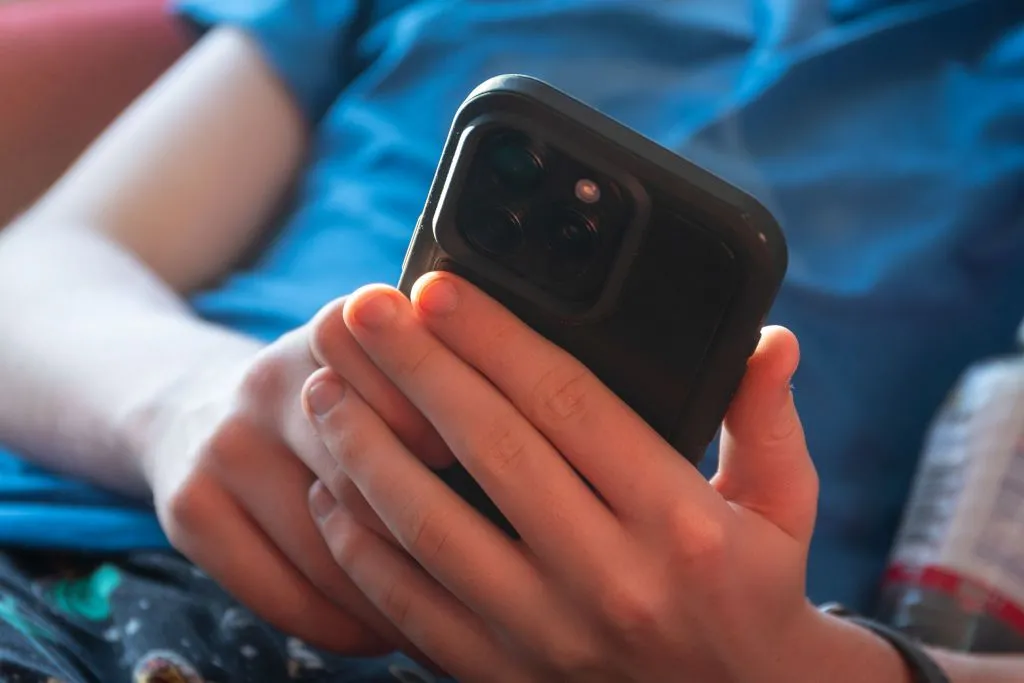


As the 2025–26 school year started, Ohio law implemented a new phone policy. It states that from the beginning of the school day until dismissal, no phones are permitted. This includes during study halls, lunch, and even if a teacher gives permission. The policy aims to increase grades and productivity while decreasing distractions and cyberbullying.
When first hearing this, most students were enraged and shocked by the new policy, while teachers believed it to be a great idea. Currently, we are about a quarter into the 2025–26 school year, which has given both students and teachers enough time to adjust to the new phone policy. Out of my own curiosity, I interviewed one member of our staff and one member of the student body to see how each felt about the rule.

The teacher I interviewed was Mr. Adam Burkhart, one of Northmont’s chemistry teachers, who has been teaching for 20–23 years. He said that throughout his years of teaching, he’s seen a gradual increase in screen time.
Some of my first questions were about whether his students are focusing more compared to last year. He said, “Yes, but the side effect of having no phones is that they talk more.” He added that he would rather have them talk more, as they are not only more engaged in class but also engaged in the moment.
Mr. Burkhart believes phones negatively affect mental health, noting that both his students and his own kids become more irritable when constantly on their devices. He’s also noticed less misbehavior overall, saying he now mainly gives detentions for tardies and phone use.
Many students argue that banning phones during lunch and study hall goes too far. Mr. Burkhart explained that Principal Evans wants study hall to remain an academic period, so phones would undermine that purpose. However, he believes lunch should be more flexible. He also said the school should have adopted the rule earlier—“for more consistent enforcement,” as the middle school did three years ago.

For the student perspective, I interviewed Claria (CC) Cavigla–Walden, a Northmont sophomore. She felt the policy was unnecessary, saying high schoolers were used to having phones. Still, she understands the reasoning behind it, even if she dislikes it.
CC said her grades have improved since the change, though she still doesn’t participate much in class. She also noted that students got in trouble often at the start of the year, but things have since calmed down. Without phones, she said, “students can’t set up fights during or after school.” Still, she sees students using phones about every other period, often unnoticed by teachers.
On mental health, CC believes social media—not phones themselves—is the main issue. She admits being without her phone has encouraged her to talk to people more and make new friends. However, she feels the policy goes too far at lunch, when many students struggle socially and have little to do. She also thinks applying the rule to teachers is unnecessary since they rarely check their phones during class.
To summarize, based on these interviews and my own experience as a student, there have been mostly improvements—whether in grades, behavior, social interaction, or even mental health. However, most people believe the policy goes too far during lunch, and many students think study hall should allow phones as well. Students seem to understand why these policies exist but still feel the school has taken them a bit too far.