

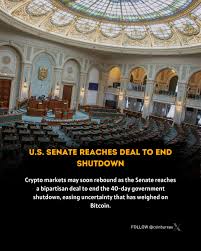
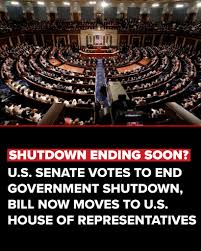
Stocks closed markedly early this Monday after the Senate in Washington D.C. voted to advance a potential deal on the government shutting down. According to the US government shutdown history, this has accordingly been the longest US government shutdown to happen.
This has weighed down on economic output and has caused uncertainty over the market for well over a month. Some reports that were uncovered with the support of other big companies reported that “The Dow Jones Industrial Average closed up 380 points, or 0.8%, while the S&P 500 climbed 1.5%. The tech-heavy Nasdaq increased 2.2%”(Zahn November 11,2025).
Last Sunday, lawmakers in a session cleared a key obstacle towards potentially reopening the government by advancing a short-term funding bill by an extremely close vote of 60-40, just meeting the requirements for it to be passed. Stocks rebounded on Monday after major indices registered a loss over the previous week, a rare blemish that hadn’t happened in four weeks prior. The economy has shown some signs of strain during the shutdown.
News reported from the University of Michigan revealed a decline in shopper attitudes in November, leaving consumer sentiment at its lowest point since 2022, showing that the American household debt has reached its peak.
The Senate reconvened on Monday to continue working toward ending the federal government shutdown, which is now in its 41st day.
Currently, there remain some procedural measures necessary for the Senate to pass a deal on the government shutdown and send it for approval. A possible solution to this issue would be restoring jobs and backpay for thousands of unpaid workers which could potentially give the U.S. economy a bit of a jolt
News reported “The Federal Reserve is bound to issue a decision on the level of interest rates early next month” (Zahn November 11,2025).The central bank has affected interest rates a quarter of a percentage point at each of its last two meetings.