
On February 28, amidst the beginnings of the joint United States-Israel operation against Iran, and the subsequent conflicts, the Rafah Crossing was once again closed off.
The Rafah Crossing is a border between the Gaza strip and Egypt, and serves as a key gateway for civilians as the war with Hamas and the Israeli Defense Forces (IDF) slowly but steadily approaches a decline. For a brief period of time in February, this exit from Palestine served as the one way for some of the thousands of wounded and sick Palestinian population affected by the war to get desperately needed aid and medical care. The Southern crossing has and is still recognized as vital in the delivery of resources and humanitarian aid to the nearly 2 millions surviving Gazans who were displaced by the conflict.
However, when the U.S.A and Israel joined forces to launch strikes against Iran and other territories, the crossing was once again closed off. Israel’s Coordinator of of government Activities in the Territories (COGAT) said in a statement, “Several necessary security adjustments have been implemented, including the closure of the crossings into the Gaza Strip, among them the Rafah Crossing, until further notice,” (Magee, Mar. 1, 2026). Upon its re-opening, the Rafah crossing allowed only a small number of the civilian population through, and the flow of humanitarian aid from the United Nations was reportedly impeded. COGAT attempted to refute claims that aid was not being allowed through, lengthening shortages. They claimed that since the start of the ceasefire, Gaza had received upwards of four times the populations’ nutritional requirements. However, they did not provide claims to back this up.
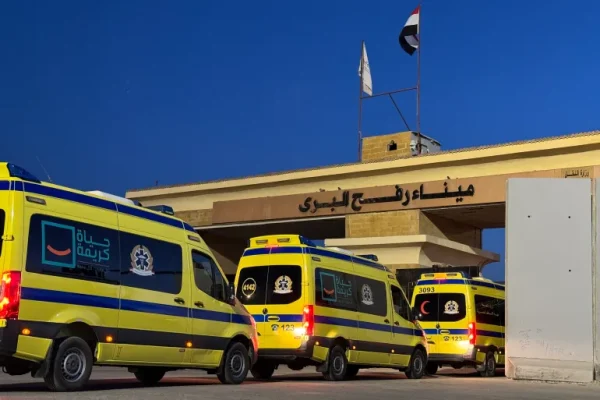
But, despite the seemingly slow progress of getting access to supplies and treatments to the suffering Palestinian people, Rafah still acts as a key point in the progress of the ceasefire between Gaza and Israel.
The closing had lasted for just more than three weeks. On March 19, the border crossing was re-opened, allowing a few of the many who are in urgent need of this way out. After the crossing re-opened, the Palestinian Red Crescent Society said that only 8 Palestinian who fell under injury due to Israel’s attack – and 17 of their family member – would be allowed through. While a seemingly reduced number, this is consistent with the first re-opening in February. However, despite the re-closing having been temporary, it remains clear that the peace plan brokered to end the war in Gaza remains under duress.
Since Israel began attacking Iran, attacks against the occupied strip had declined. But, it would seem they have now started to rise once more. Reuters writes, “While Israeli attacks in Gaza declined in the days after the U.S. and Israel launched attacks on Iran on February 28, according to residents, medics, and analysts, they have since started to rise again. On Thursday, two Israeli airstrikes killed at least four Palestinians and wounded some others in two separate incidents in Gaza City, local health officials said” (Reuters, Mar. 19, 2026). And a reported 680 Palestinians, and 4 Israeli soldiers, have been killed since the U.S. brokered peace deal went underway last October. Amidst the current chaos of news regarding our conflict with Iran, the ongoing struggle of Palestine has flown relatively under the radar. But, the path towards peace – strained though it may seem – is ever continuing.




![The latest Republican criticism of comedian and TV host Jimmy Kimmel and call to kick him off the air came from United States First Lady Melania Trump [File: AFP] https://www.aljazeera.com/news/2026/4/27/melania-trump-blasts-kimmel-calls-on-abc-to-take-stand-against-comedian](https://northmontthunder.com/wp-content/uploads/2026/05/afp_69ef8a0faee1-1777306127.webp)